Nace.AI, Founding ML Engineer (2024.05 - current)
I joined Nace.AI as a Founding ML Engineer, where I build agents and agent SDK for AI-powered financial audit. Nace.AI develops task-specific AI models for enterprise applications, and our first product NAVI (Nace Verification Intelligence) is an AI agent for audit and compliance that provides real-time insights into risks, discrepancies, and compliance violations.
The company emerged from stealth in March 2025 with $5M in seed funding led by General Catalyst, and was founded by alumni from Google, Meta, and the University of Toronto. Headquartered in Palo Alto, California.
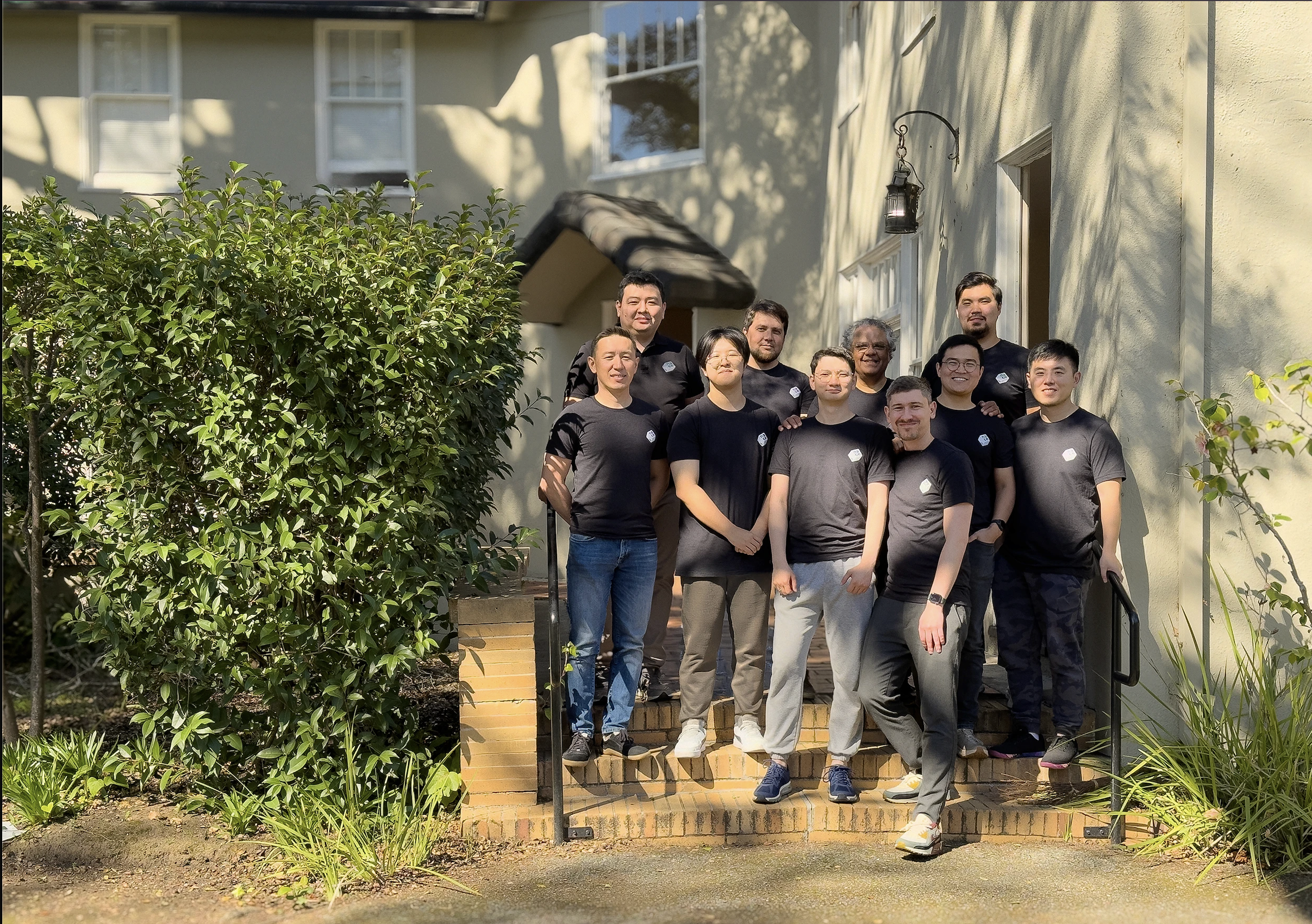
The squad that makes it all happen, Palo Alto HQ:
Bloomberg, Quantitative Research Intern (2023.8 - 2023.11)
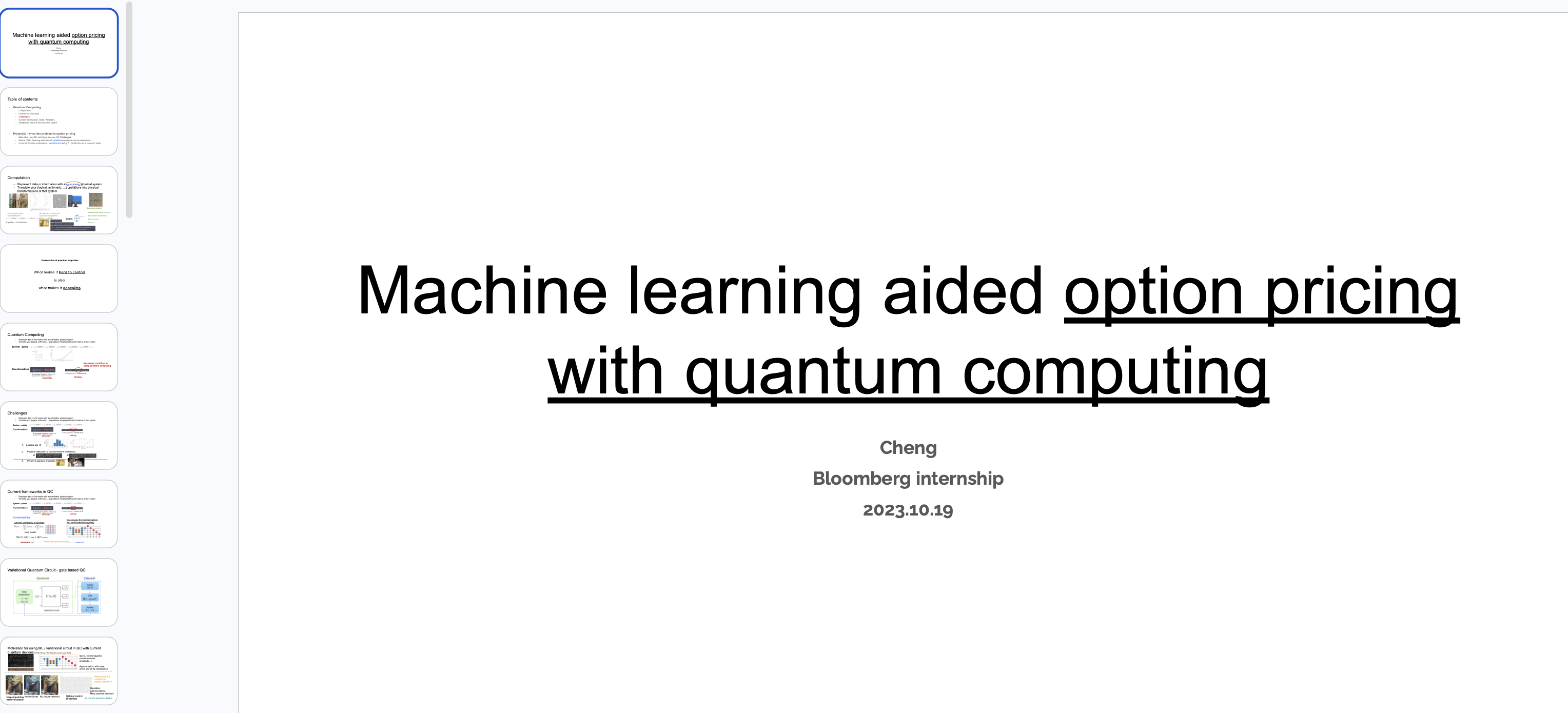
As a Quantitative Research Intern at Bloomberg, I worked on using quantum states to analog compute the option pricing surface evolution with neural ODE. This work combined quantum computing approaches with neural ordinary differential equations to model the dynamics of option pricing surfaces. Research details →
My pitch on marrying quantum states with neural ODEs for option pricing:
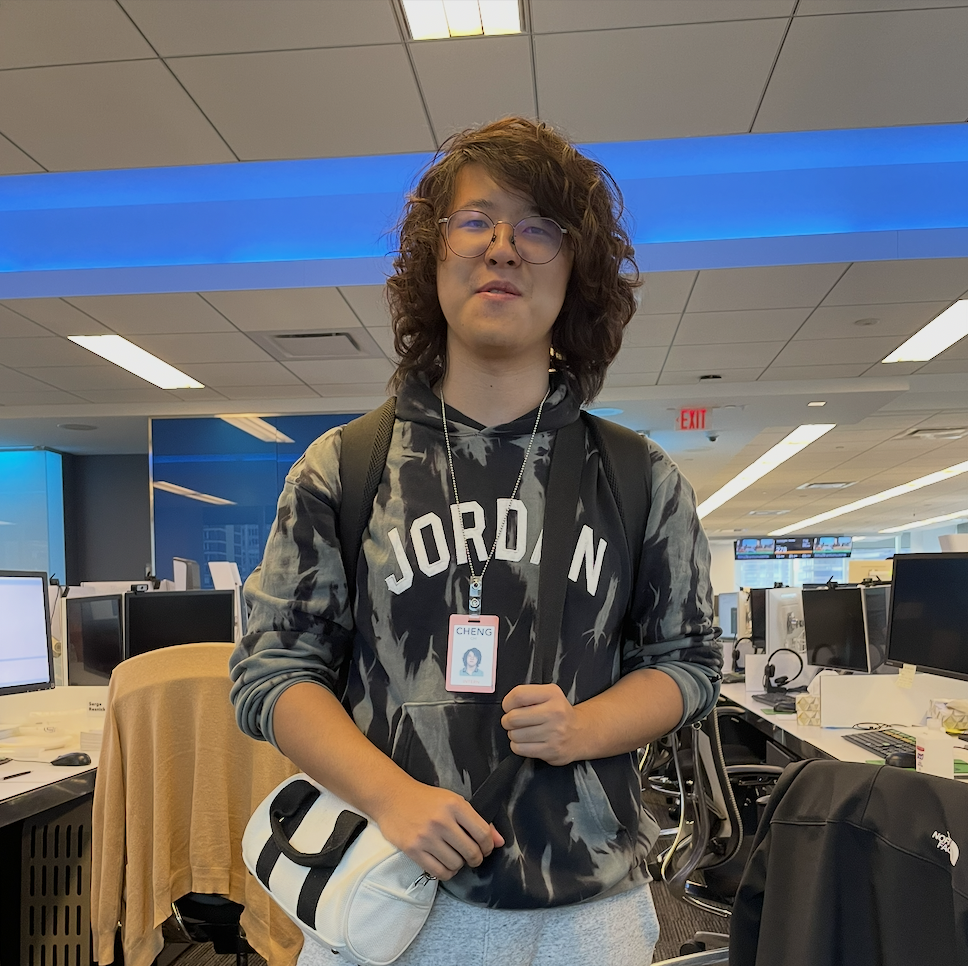
Living the NYC dream at Bloomberg’s legendary office:
Borealis AI (RBC), ML Research Intern (2024.01 - 2024.05)
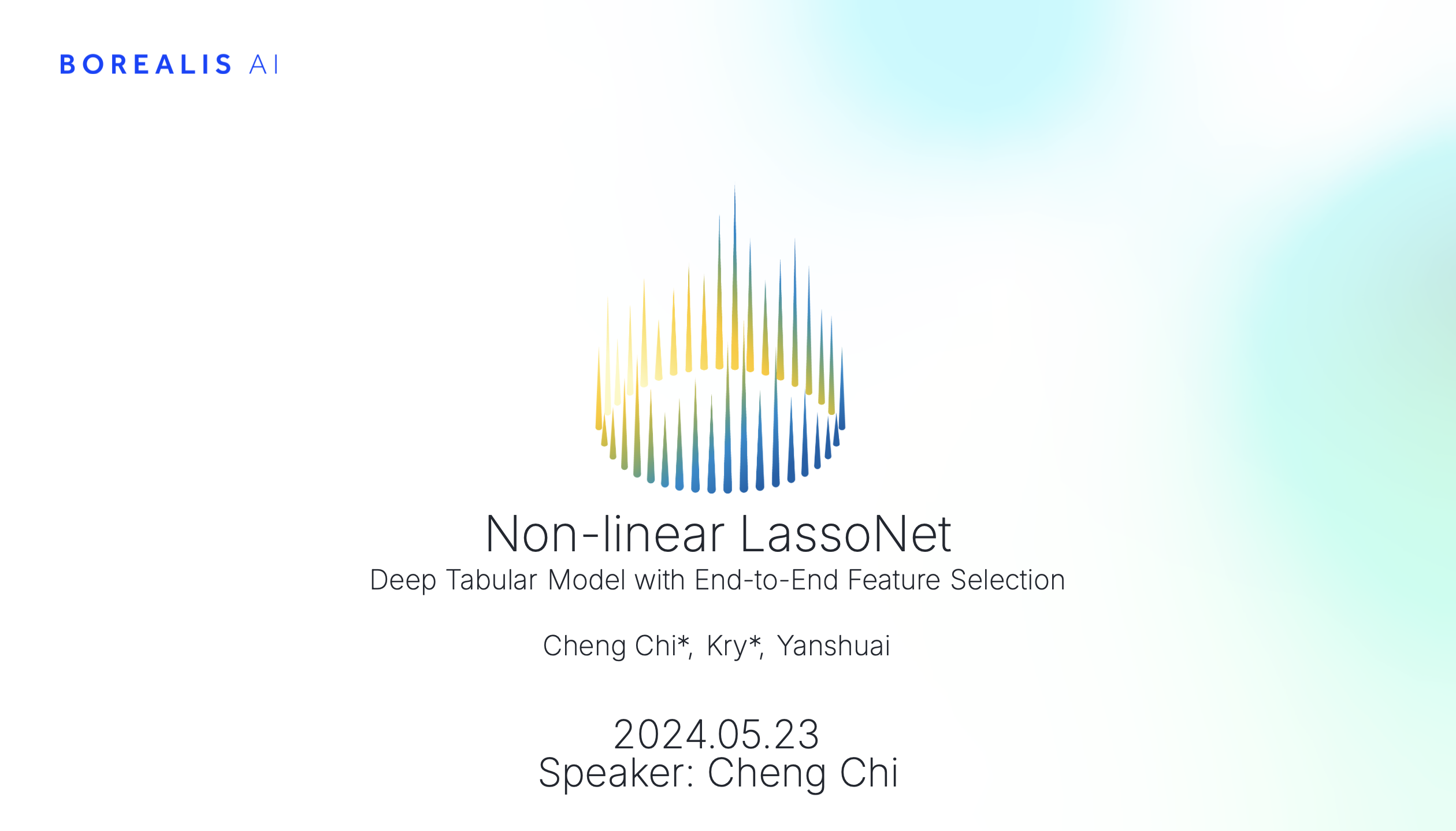
At Borealis AI in Toronto, I worked on non-linear LassoNet, a deep tabular model that respects inductive biases in tabular data. This approach outperformed tree-based models and other state-of-the-art deep tabular models. To paper · Research details →
Presenting Non-linear LassoNet — beating tree-based models at their own game:
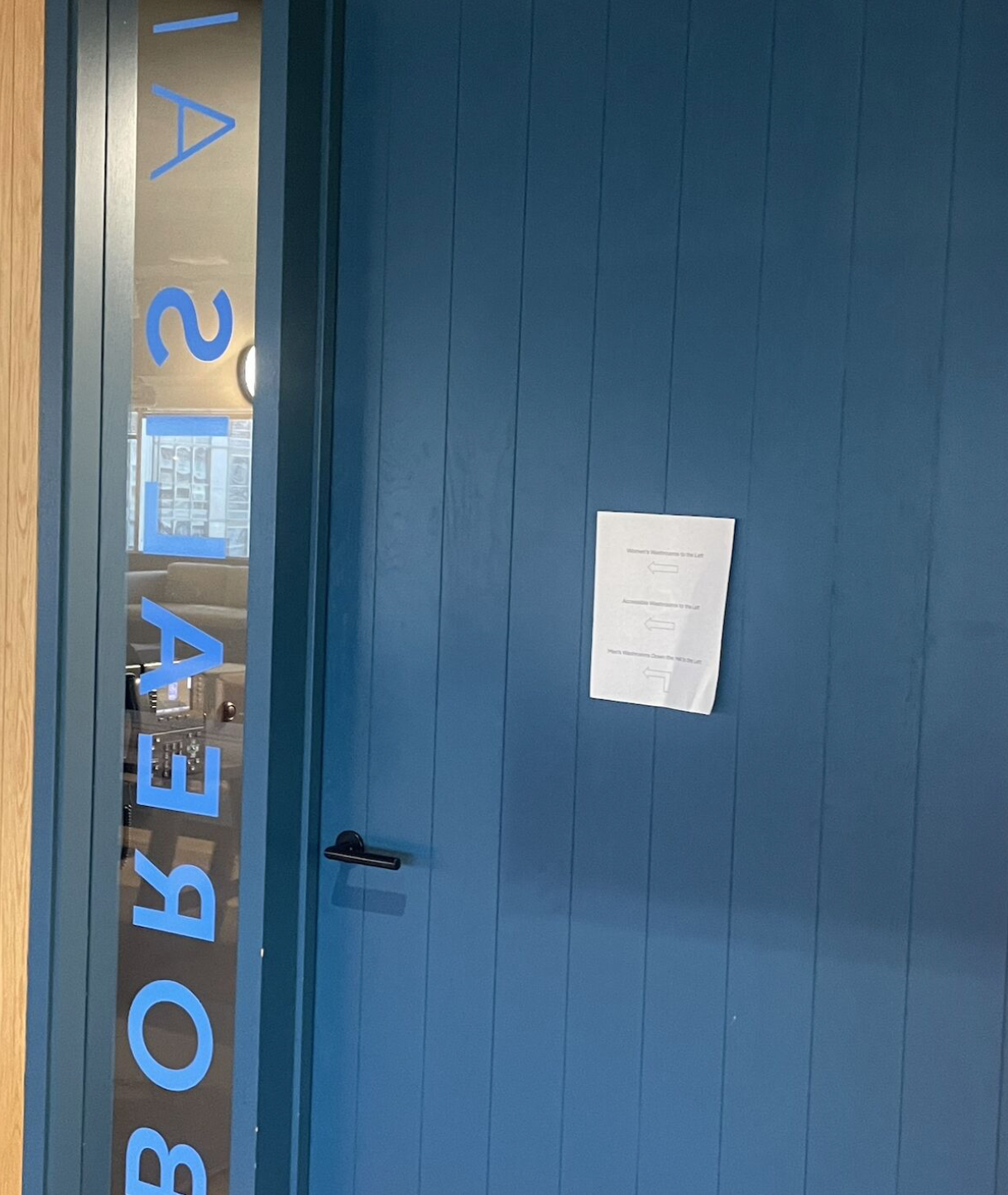
Iconic large blue door to the office that I will miss:
C-MORE / DORL, Research Assistant (2021.9 - 2023.9)
During my master degree, I worked as a research assistant in C-MORE / DORL laboratory led by professor Chi-Guhn Lee at U of T.
Late nights, whiteboards full of equations, and memories I wouldn’t trade:
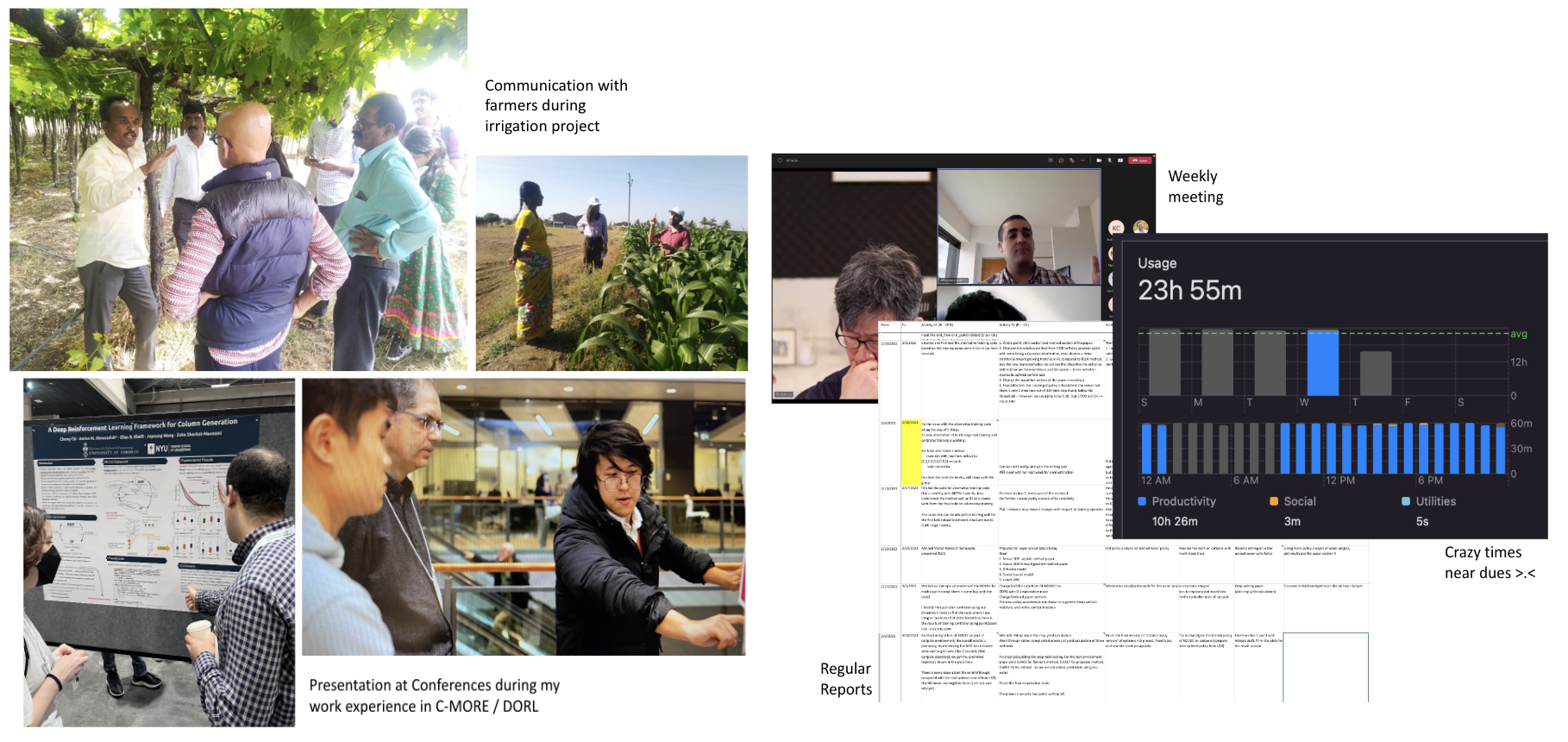
My work focuses on application of Reinforcement learning to physical system control, finance and combinatorial optimizations, and my research in around 2 years in this lab led to these established work. See research details: RL for CG · Neural ODE control · No-arbitrage pricing · Time series augmentation · Quantum systemic risk · Central bank control
Canadian Tire Corporation, Capstone Leader (2020.9 - 2021.4)
During my last year of my Bachelor degree, our capstone team worked with the Optimization & Analytics Team at CTC to develop a prediction model that could generate a more precise estimation of the number of outbound cubes per trailer for each transload facility in a weekly basis. The prediction would then be used in downstream decision optimization that is directly related to profits.
We build the whole coding scheme shown in the plot workflow below, and we developed customized LSTM for predicting the target time series:
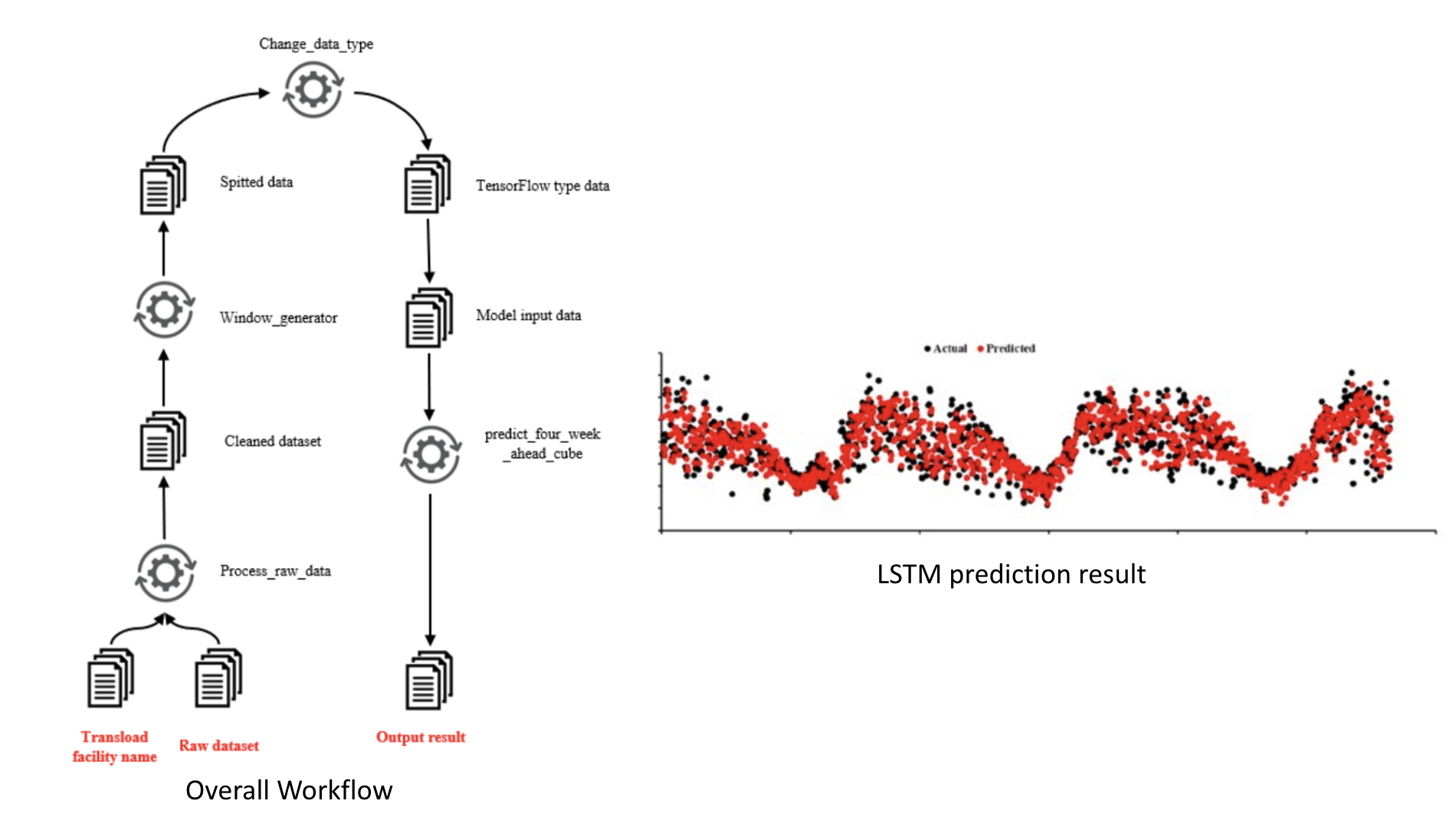
As a result, our model reduced the mean absolute error of prediction by 39.3% compared to the existing method used by CTC.
Mercedes Benz, Data Analyst Intern (2019.5 - 2019.9)
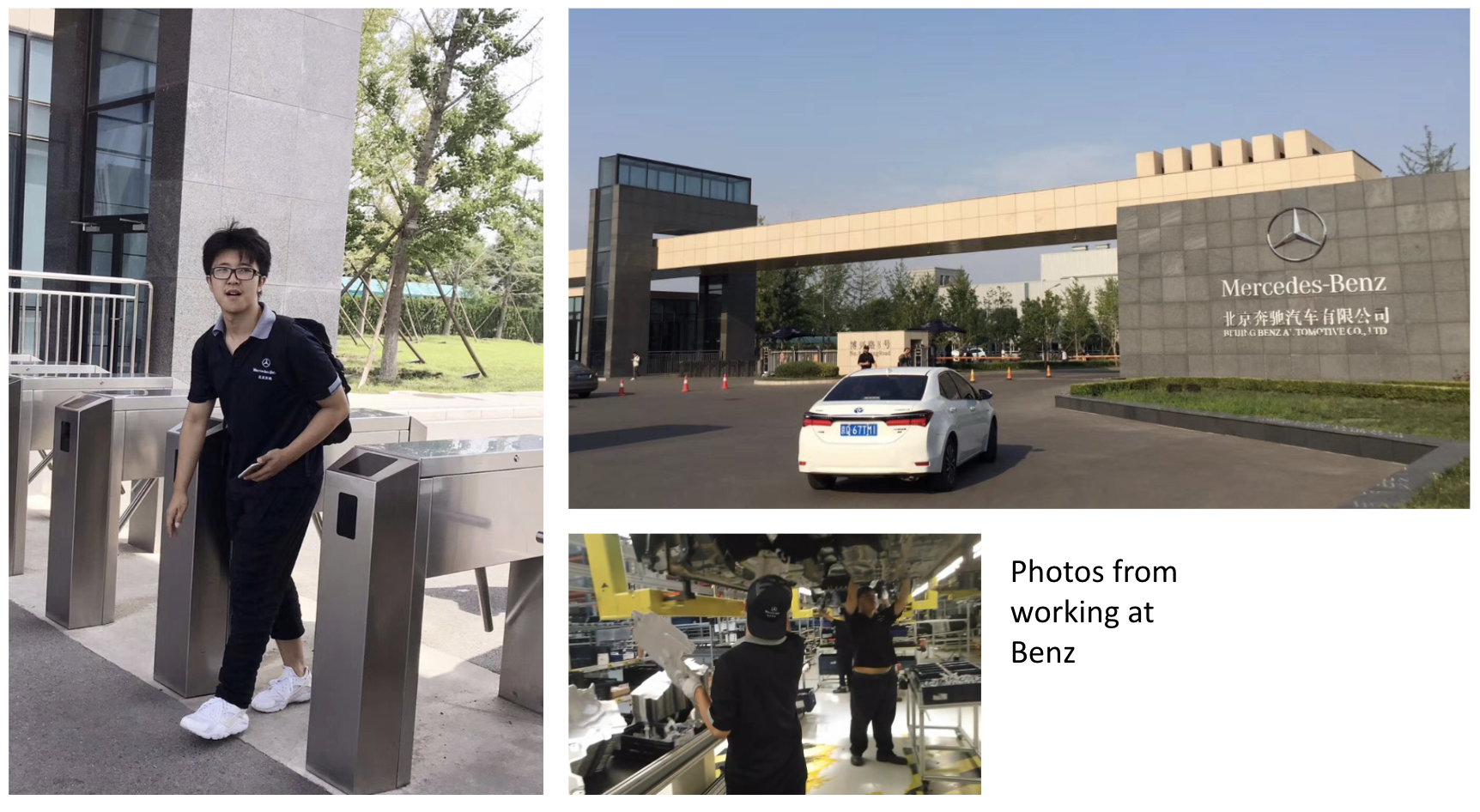
My summer internship at Benz focused on data analysis tasks at manufacturing factory of Benz, where I worked with professional Method Time Measurement (MTM) Engineer to collect data from assembly line, conducted further MTM data processing, visualization and data analysis with Python and Tableau. More specifically, I had to process, transform and aggregate the raw MTM measurement data and created dataabase connections with SQL, and I also visualized and analyzed the data using Tableau:
 Note that the pictures are blurred as they contain company private information.
Nothing quite like seeing a Mercedes come together on the line — loved every minute here:
Unilever Canada, Research Assistant (2022.1 - 2022.5)
During my master degree, our lab was collaborating with Unilever Canada for projects related to distribution center (DC) shipment cases time series prediction. The tasks relate to raw data processing, cleaning, feature engineering, and model development. Our team is aiming to develop advanced ML (Transformer-based) time series prediction methods:
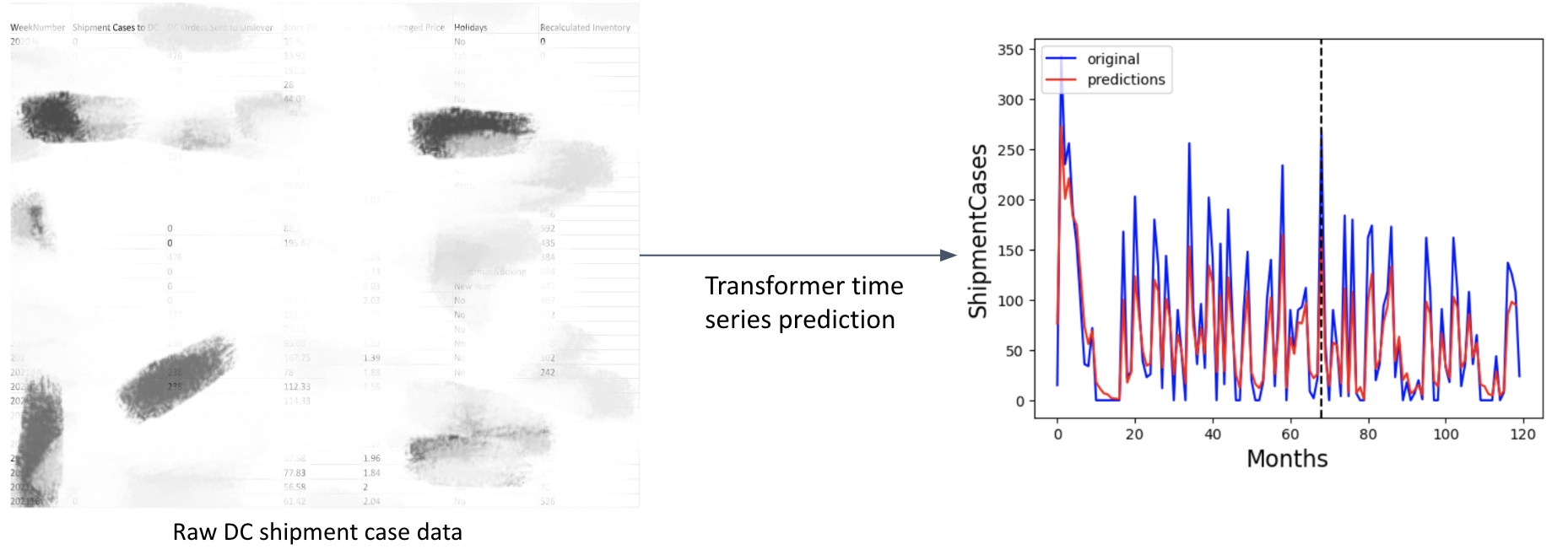 The current method reduces prediction error by 26% compared to company’s original method.